HVAC Troubleshooting Guide
AC Not Working?
12 Things to Check
Before Calling an HVAC Company
Simple troubleshooting steps that could save you time, money, and an expensive service call.
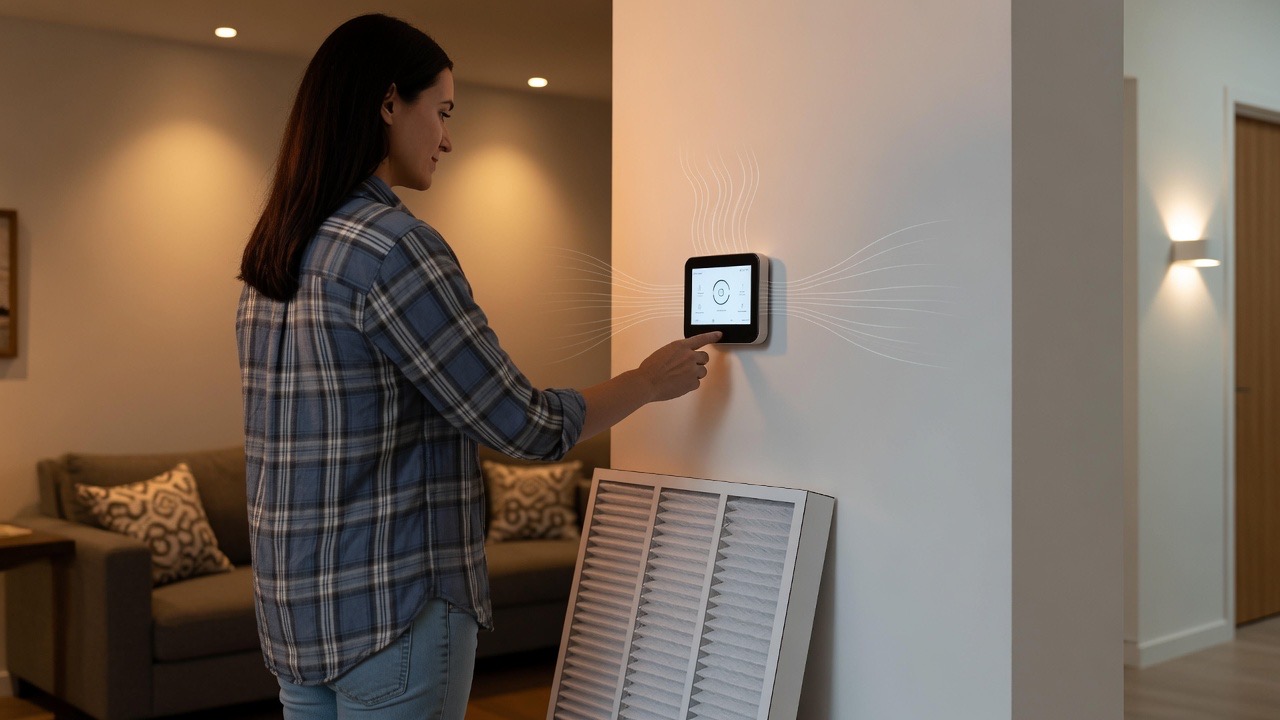
Fix simple issues yourself before spending hundreds on repairs.
Catch small problems before they cause major system damage.
Step-by-step guide to get your AC back up and running fast.
HVAC knowledge you can trust from the air filter experts.
What’s Inside
Is Your AC Running But Not Cooling?
One of the most common summer complaints is an air conditioner that runs constantly without making your home any cooler.
If your thermostat is set correctly and your system is running, but the temperature inside continues to rise, start with the simplest possible causes.
The #1 culprit? A dirty air filter.
A clogged filter restricts airflow, which can cause your system to freeze up and stop cooling.
- Weak airflow from vents
- Long run times
- Warm air blowing
- Ice on refrigerant lines
- Higher energy bills
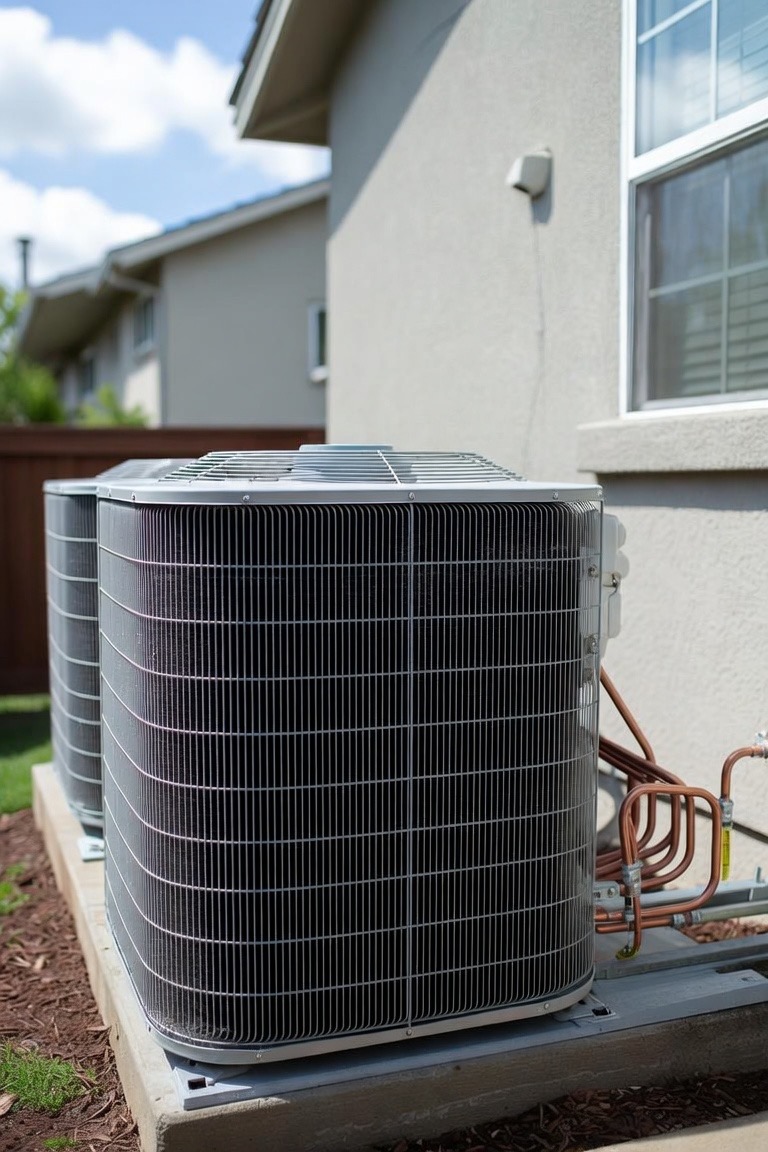
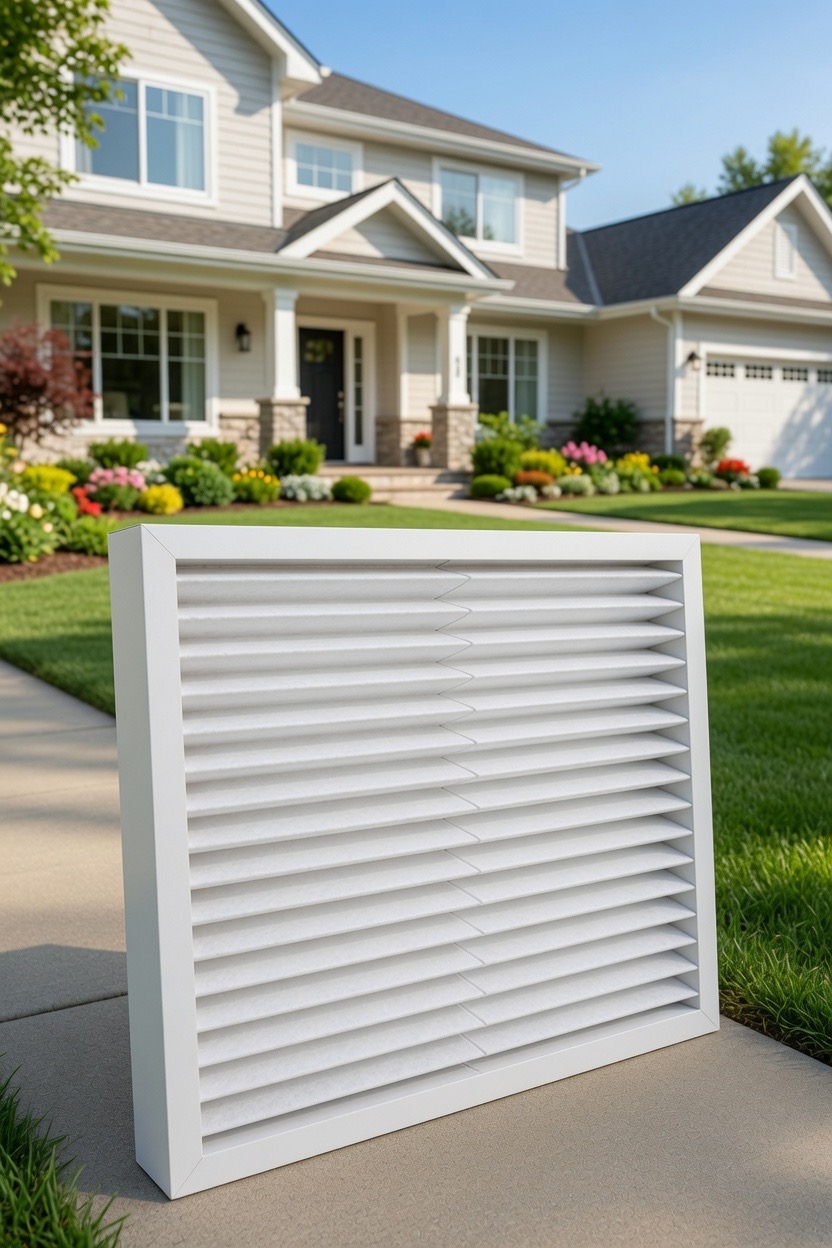
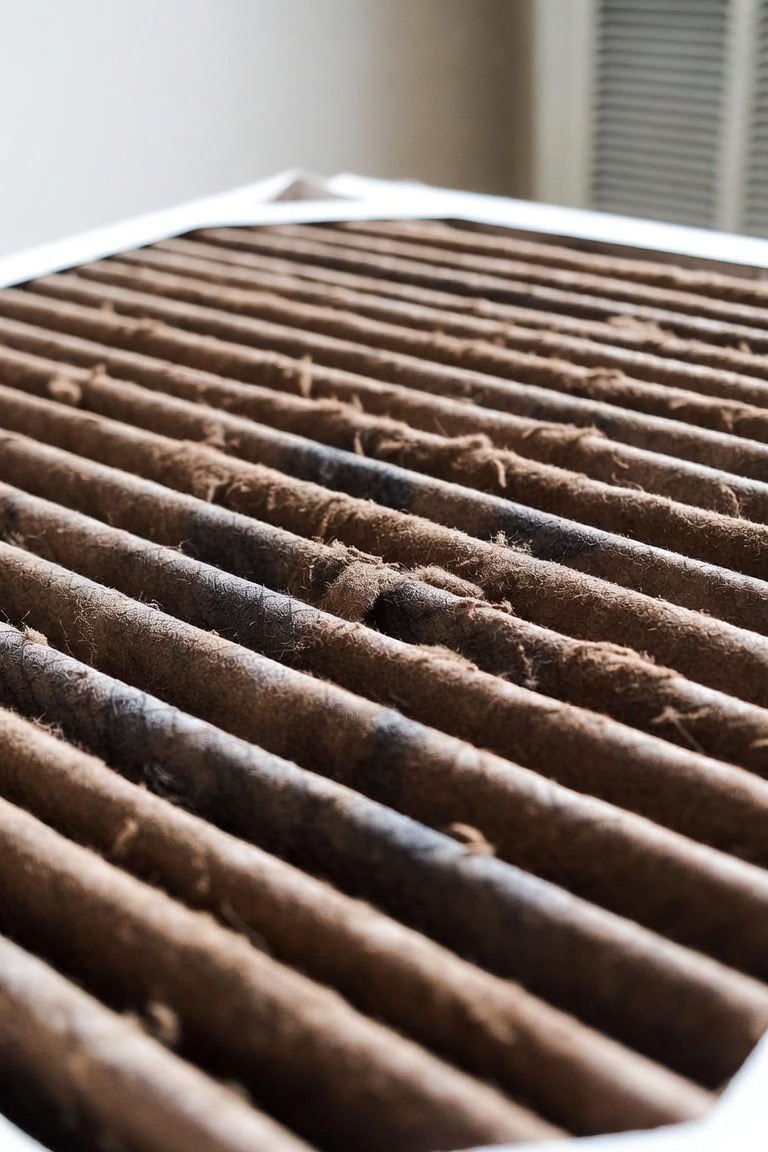
A Dirty Filter Is the #1 Reason Air Conditioners Stop Working
Your air filter traps dust, dirt, pollen, and other particles. Over time, it gets clogged — restricting airflow and forcing your system to work harder.
This can lead to frozen coils, poor cooling, system breakdowns, and costly repairs.
Is Your Thermostat Set Correctly?
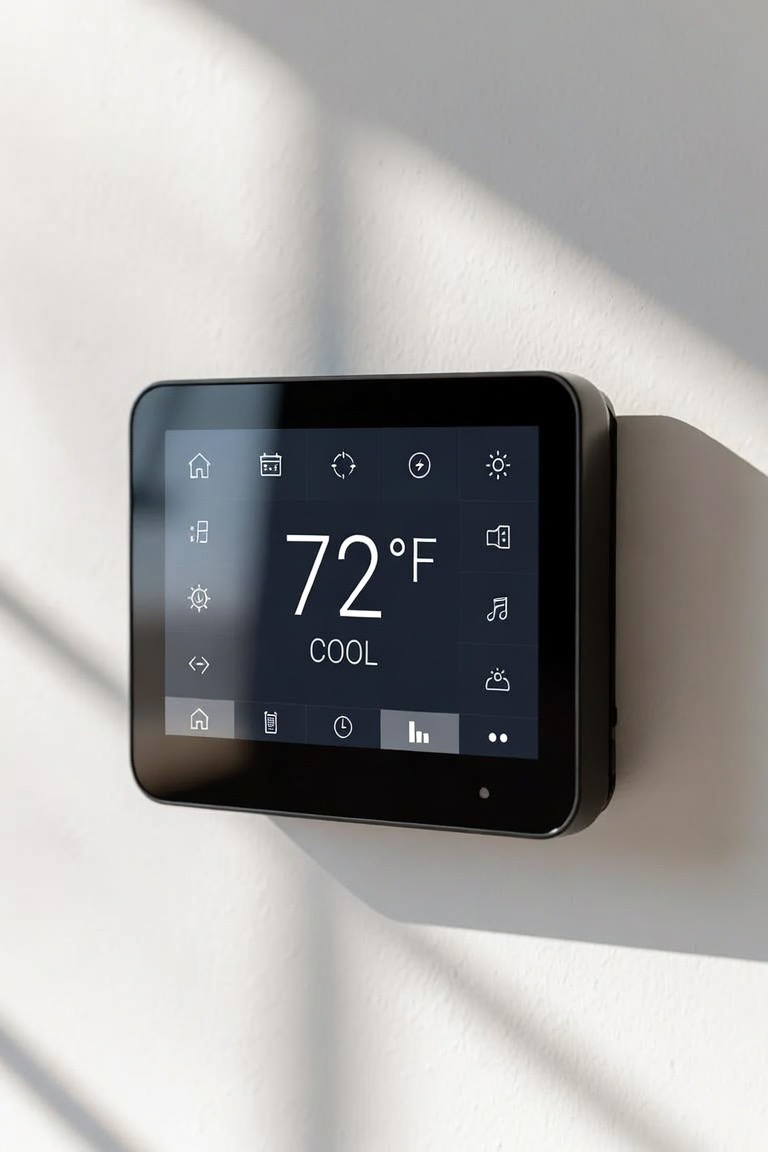
Before you blame the equipment, check the brain. Thermostat issues are responsible for a surprising number of “my AC is broken” calls — and most of them take 30 seconds to fix.
Walk through these in order:
- Set to Cool, not Heat, Off, or Fan-Only
- Set point is at least 3°F below the current room temperature
- Fan is set to Auto, not On (On runs the blower constantly and can mask cooling problems)
- If battery-powered, swap in fresh batteries — low batteries cause erratic behavior
- Check the schedule — make sure a programmed setback isn’t fighting you
- If it’s a smart thermostat, confirm it’s online and not stuck on “Eco” or “Away”
If the display is blank, the thermostat may have lost power — check the air handler’s float switch (a tripped condensate float switch cuts thermostat power as a safety) and the breaker for the indoor unit.
Did Your AC Just Trip the Breaker?
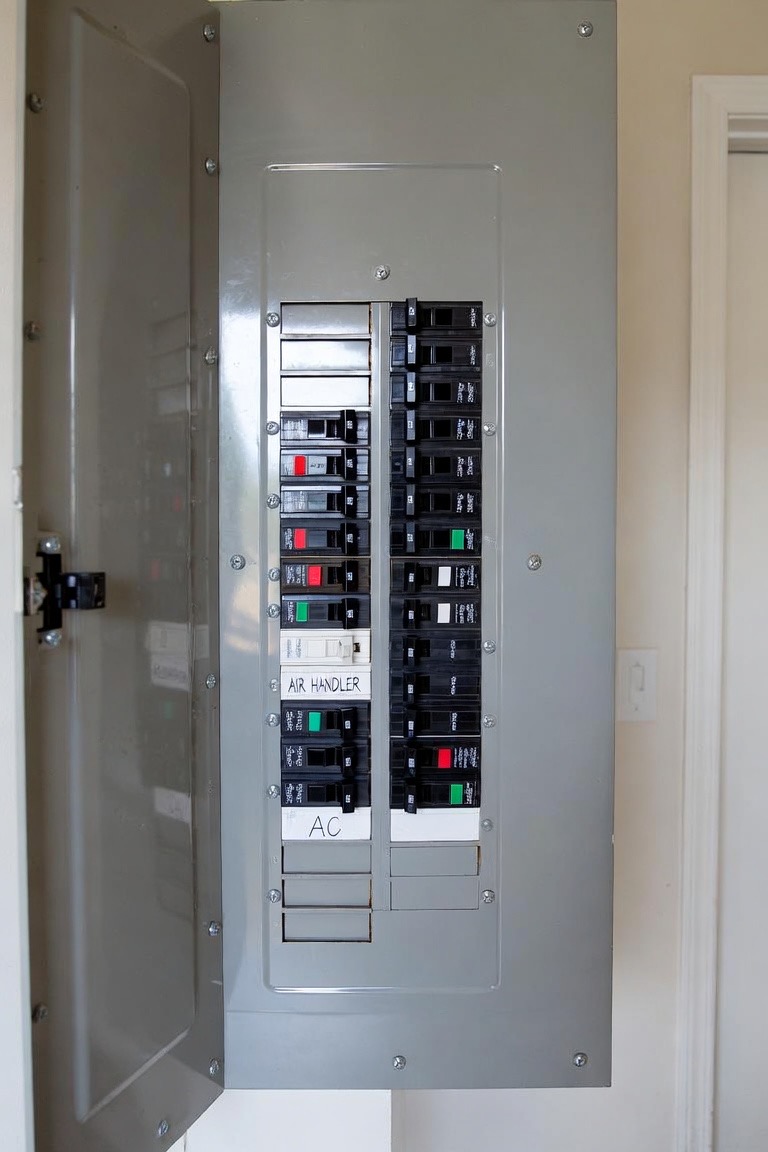
A central air conditioner usually has two breakers: one for the indoor air handler and one for the outdoor condenser. If either is tripped, the system won’t cool.
Open the main electrical panel and look for a breaker that’s halfway between On and Off, or that’s clearly labeled in the Off position. Reset it by flipping it fully Off, then firmly back to On.
If the breaker trips again — stop. Repeated trips mean something is drawing too much current, usually a failing capacitor, a seized motor, or a short. Continuing to reset a tripping breaker can damage the equipment and is a fire risk.
- Reset both AC breakers (indoor and outdoor)
- Wait 5 minutes before turning the system back on at the thermostat
- If it trips immediately, call a licensed HVAC technician
- Check the outdoor disconnect box (next to the condenser) — make sure the pull-out is fully seated
Is Your AC Frozen Up?
If you see ice on the copper refrigerant line outside or on the indoor coil, your evaporator is frozen. A frozen coil can’t absorb heat from your home — so the air coming out of the vents will feel only slightly cool, or not cool at all.
The two most common causes:
- Restricted airflow — a dirty filter, closed vents, or a blocked return
- Low refrigerant — usually from a leak, which needs a licensed tech
To thaw it out: turn the thermostat to Off (or to Fan-Only) and let the system sit for 1–3 hours. Once fully thawed, replace the air filter and turn it back to Cool. If it freezes again within a day, you have either a deeper airflow problem (dirty coil, undersized return) or a refrigerant issue. Both need a pro.
Frozen Coil Deep Dive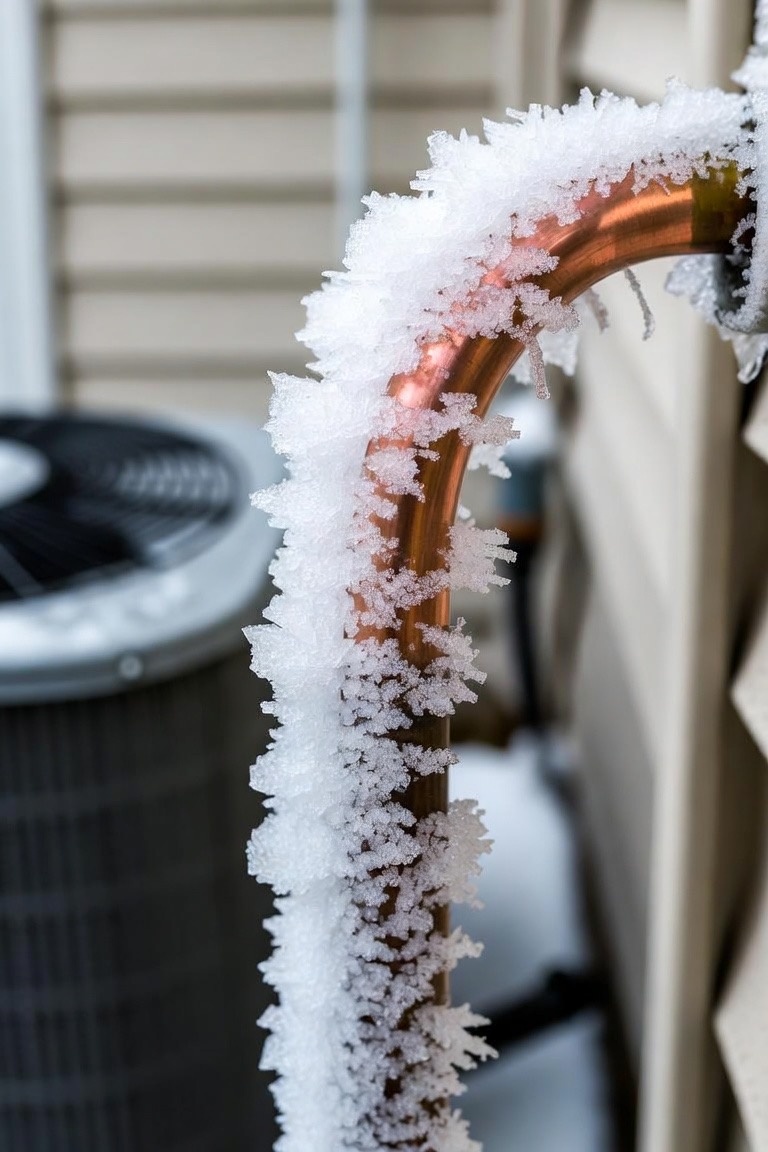
Is the Outdoor Unit Dirty or Blocked?
The outdoor unit’s job is to dump heat from your home into the outside air. If it can’t breathe, it can’t dump heat — and your AC can’t cool.
Walk outside and look at the condenser. It should be running quietly, with the fan on top spinning steadily and warm air pushing up out of it.
- Clear at least 2 feet of space around all sides — no shrubs, fence, mulch, or stored items pressing against the coils
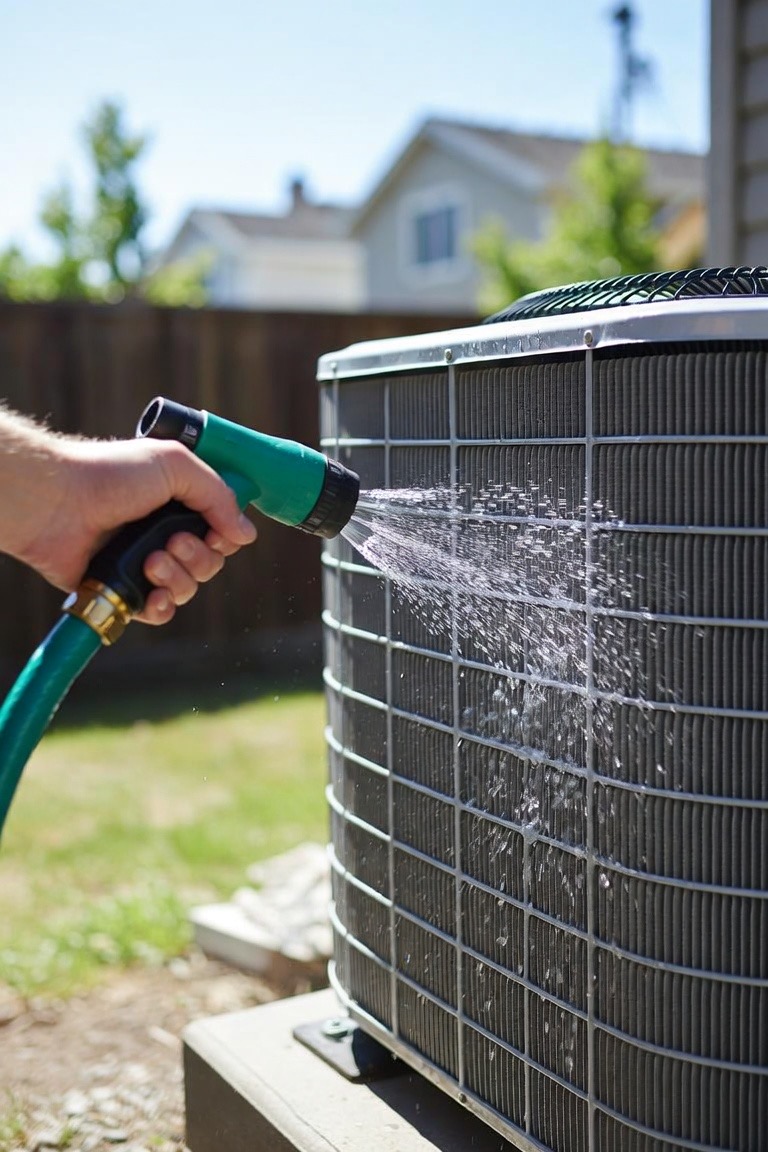
- Hose off the fins gently from the outside in (low pressure, top to bottom) to flush out cottonwood, grass clippings, and dust
- Bent fins can be straightened gently with a fin comb if needed
- If the fan isn’t spinning but the unit is humming, shut it off and call a tech — a seized fan motor or bad capacitor will destroy the compressor if left running
An impacted condenser can cut cooling capacity 15–25% and raise your energy bill at the same time. A 10-minute rinse is one of the highest-ROI HVAC tasks a homeowner can do.
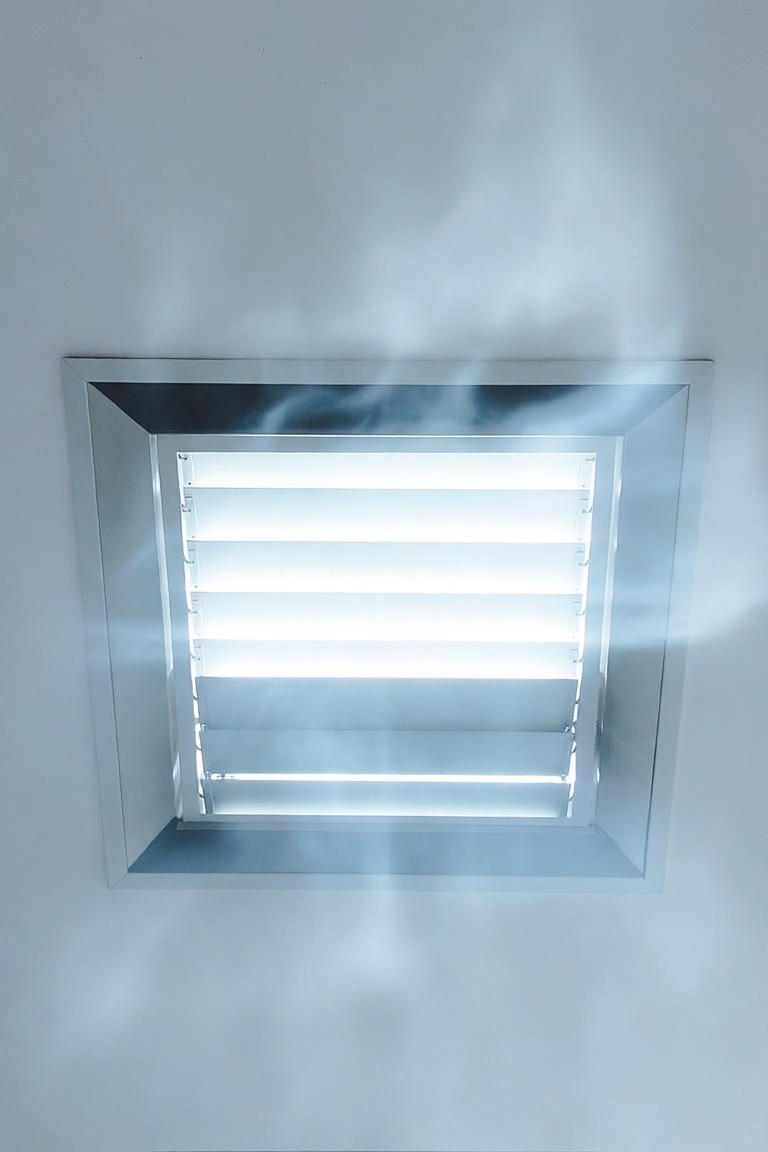
Are Your Vents Blocked or Closed?
A common myth is that closing vents in unused rooms saves energy. It doesn’t. Modern HVAC systems are designed for a specific airflow rate; closing too many vents raises static pressure, stresses the blower, and can freeze the coil — back to problem #5.
Walk the house. For every supply register (the ones the cold air comes out of) and every return grille (the ones air gets pulled into), check:
- Vents are open, not partially or fully closed
- Nothing is blocking them — no furniture, rugs, drapes, or boxes
- Returns are especially important; a starved return is the fastest way to freeze a coil
- Air filter at the return grille is clean (some systems put the filter here instead of at the air handler)
Rule of thumb: never close more than 20% of your supply vents. If certain rooms always run hot or cold, the answer is usually a duct issue or a system rebalance — not closing vents.
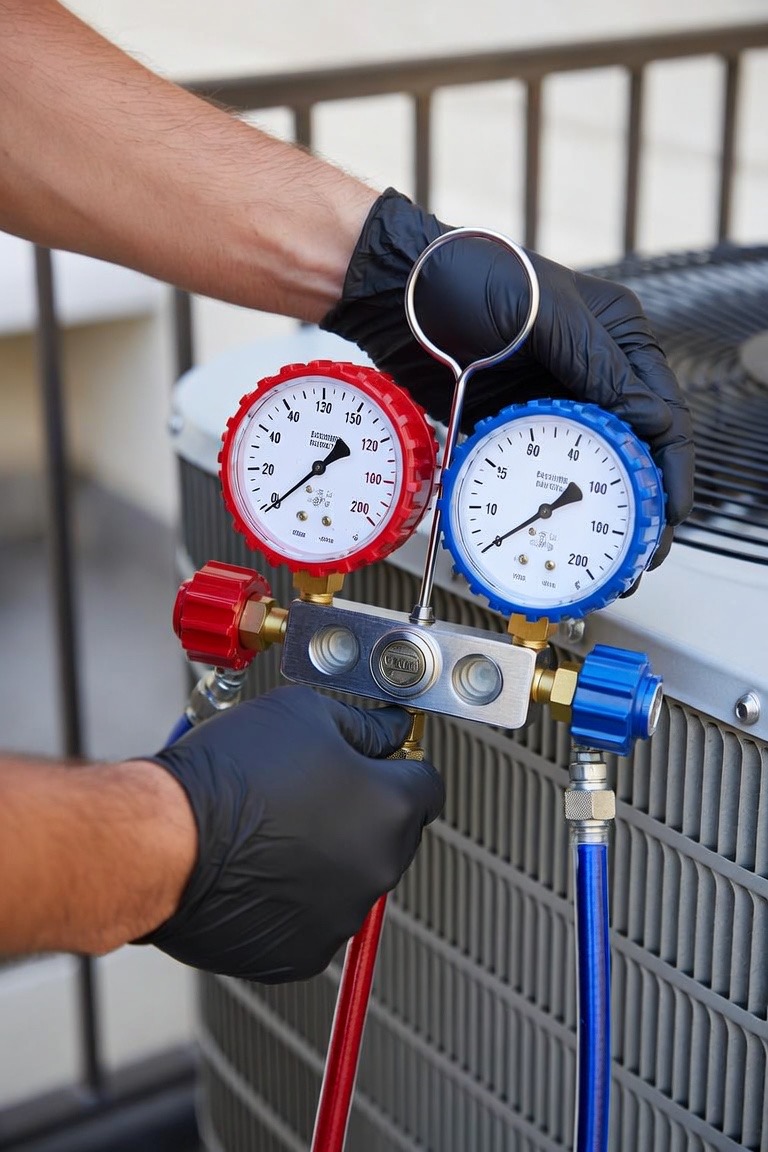
Is Your System Low on Refrigerant?
Refrigerant doesn’t get “used up.” A sealed system that’s low on refrigerant has a leak — period. If a tech adds refrigerant and skips the leak search, you’ll be back in their service queue within a year.
Signs of a low refrigerant charge:
- System runs constantly but cools poorly
- Ice on the indoor coil or outdoor refrigerant line
- Hissing or bubbling near the indoor unit
- Higher than normal energy bills
- Vents blow only slightly cool air, even on max
This is not a DIY repair. Refrigerant handling requires EPA Section 608 certification, the correct refrigerant for your system (R-410A, R-32, R-454B, or for older systems R-22 — which is no longer manufactured), and equipment to pull a proper vacuum. Adding refrigerant to a leaking system without fixing the leak is environmentally illegal in most jurisdictions and just delays the real repair.
Call a licensed HVAC contractor. Ask up front whether the visit includes leak detection, not just a refrigerant top-off.
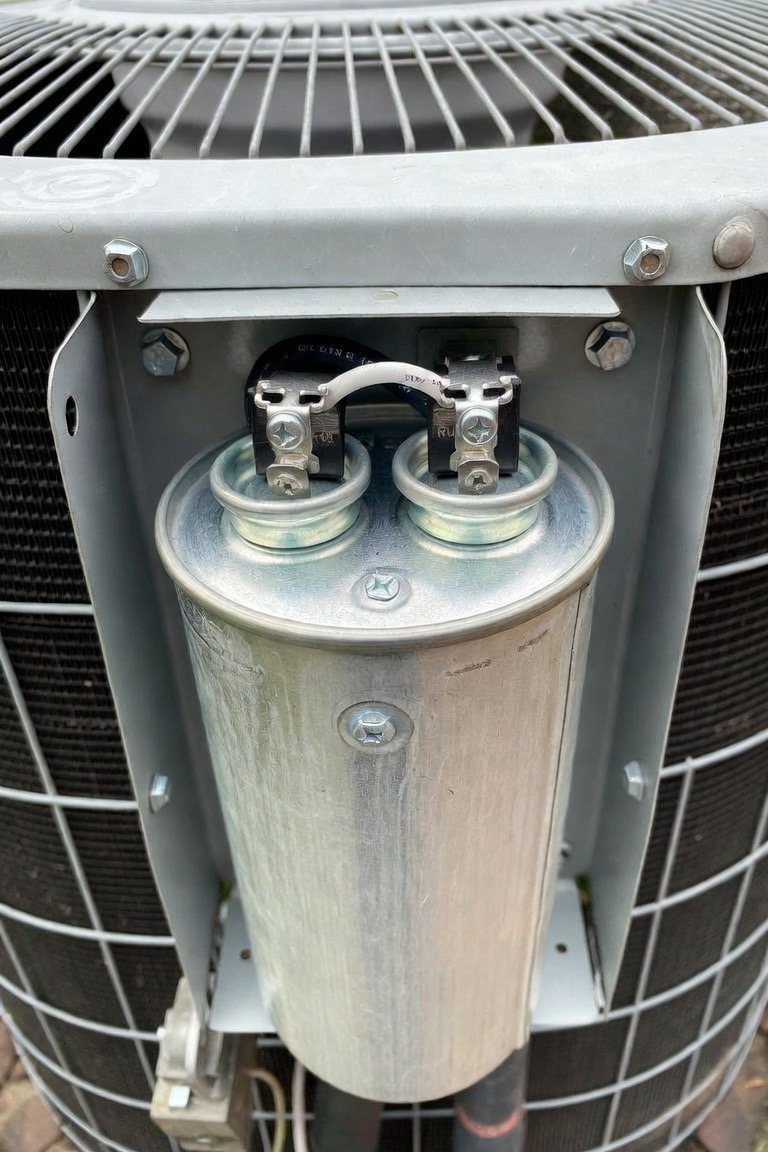
Is the Capacitor Bad?
The capacitor is a small cylindrical battery-like component that gives your compressor and fan motors the jolt they need to start up. When it weakens, the unit hums but doesn’t start. When it fails outright, nothing happens.
Classic symptoms:
- Humming from the outdoor unit, but the fan won’t spin
- Fan starts if you give the blade a gentle push with a stick (do not use your hand) — a temporary sign of a weak capacitor
- System shuts off after a short run time
- A visibly bulged or leaking capacitor (round metal can on the side of the unit)
Capacitors are a pro repair. Even with power off, they hold a dangerous charge — they must be discharged with the correct tool before removal. The part itself is inexpensive ($15–$60); a typical service call with capacitor replacement runs $150–$350.
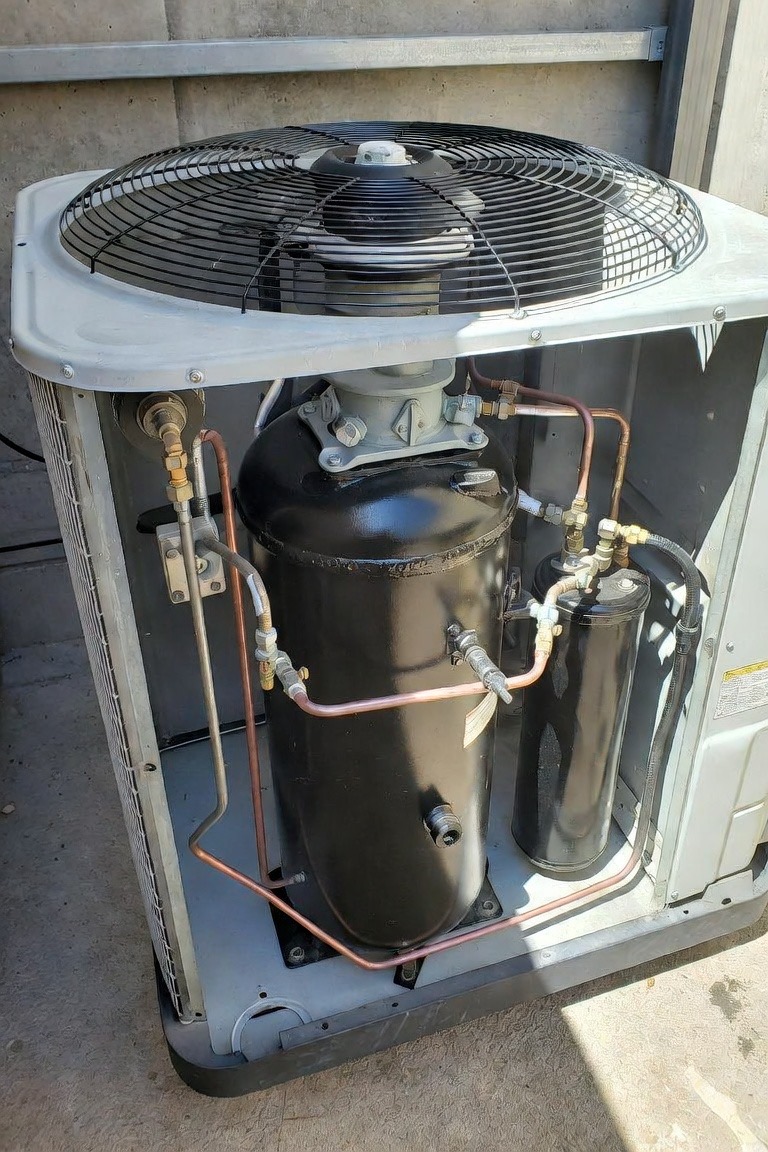
Is the Compressor Dead?
The compressor is the heart of your AC. It’s also the most expensive component to replace — and a failed compressor often means it’s time to consider whether the whole system is worth keeping.
Signs of compressor trouble:
- Outdoor unit hums or clicks but the fan and compressor don’t run
- Frequent breaker trips on the outdoor unit
- Loud knocking, rattling, or grinding from the condenser
- Warm air at the vents with the system running for hours
- Compressor short-cycles (turns on and off rapidly)
A compressor replacement on an older system typically runs $1,500–$3,500 installed. If your system is over 10–12 years old and uses R-22 refrigerant, replacing the whole condenser (or the full system) is often the better economic call. Get two opinions in writing before authorizing the repair.
Know When to Call the Pro
Some AC problems are 5-minute homeowner fixes. Others can hurt you, damage the equipment, or make the eventual repair more expensive. Here’s the dividing line.
Call a licensed HVAC technician if:
- The breaker keeps tripping after one reset
- You see, smell, or hear arcing, burning, or smoke
- The system is frozen even after a thawed coil + new filter
- You suspect a refrigerant leak (oily residue near connections, hissing, bubbling)
- The fan or compressor hums but won’t start
- You’ve gone through items 1–10 and nothing has worked
Typical repair cost ranges (US, planning estimates)
| Service | Typical Range | What Affects Price |
|---|---|---|
| Diagnostic / service call fee | $75 – $200 | Region, weekend / after-hours, brand |
| Capacitor replacement | $150 – $400 | Single-run vs dual-run, brand |
| Contactor replacement | $150 – $350 | Amperage, brand |
| Condenser fan motor | $300 – $700 | Brand, horsepower, availability |
| Blower motor (indoor) | $400 – $1,000 | ECM vs PSC, brand |
| Refrigerant leak diagnosis + repair | $200 – $1,500+ | Leak location, refrigerant type, recharge amount |
| Evaporator coil replacement | $1,200 – $2,800 | Brand, refrigerant, indoor access |
| Compressor replacement | $1,500 – $3,500 | Tonnage, brand, refrigerant, warranty |
| Complete system replacement | $5,500 – $12,000+ | Tonnage, SEER2 rating, ductwork, install complexity |
Costs vary significantly by region, system, and contractor. Use these as planning ranges — always get two written estimates for repairs over $500.
Airestor
Most “AC Not Working” Calls Start With a Filter.
Of the twelve issues on this page, the air filter is the only one that fails on a predictable schedule — and the only one you can prevent entirely. A clean filter protects the coil, the blower, and the compressor. A clogged filter is the cheapest, most common, and most preventable cause of a $300 service call.
Airestor delivers the right filter for your system, in the right size, on the schedule your HVAC actually needs. No more guessing dimensions at the hardware store. No more forgetting until the AC quits. Pre-labeled per unit for property managers. Custom sizes available. Honest sizing help.
AC Not Working? Common Questions
Why is my AC running but not cooling?
The most common cause is a dirty air filter restricting airflow. A clogged filter starves the system, freezes the coil, and prevents proper cooling. Replace the filter, then check the outdoor condenser for debris and confirm the thermostat is set to Cool. If those don’t fix it, you may have low refrigerant or a frozen coil — both of which need a technician.
Should I turn off my AC if it’s not cooling?
Yes. If your AC is running but not cooling — especially if you see ice on the refrigerant line — turn it off at the thermostat. Continuing to run a frozen or low-charge system can damage the compressor, which is the most expensive component to replace.
Can a dirty air filter really cause an AC to stop working?
Yes — and it’s the most common cause of “no cool” calls. A clogged filter restricts airflow across the evaporator coil. Reduced airflow drops the coil temperature below freezing, ice forms, and once the coil is iced over, no heat exchange can happen. The system runs, but it doesn’t cool. Replacing a 1-inch filter on time (every 30–90 days) prevents most of these calls.
How often should I change my AC filter?
For a standard 1-inch pleated filter: every 30–90 days. Homes with pets, allergies, or heavy use lean toward the 30-day end. Deeper filters last longer — a 4-inch media filter typically goes 6–12 months. Always check the filter monthly during cooling season; visual inspection beats the calendar.
Why does my AC work at night but not during the day?
This usually means the system is undersized, the heat load is too high (poor insulation, leaky ducts, sun exposure), or the condenser can’t dump heat efficiently when outdoor temperatures peak. Cooler night air gives the condenser a break, so the same equipment can keep up. Start by cleaning the outdoor unit and shading it if possible.
Why is one room always hotter than the rest?
Likely culprits: blocked or closed vents, undersized ductwork to that room, return air imbalance, or a long duct run that loses cooling capacity. Walk the room and confirm vents are open and unobstructed. If it’s a consistent issue, a balance test by an HVAC pro can identify whether the duct system needs adjustment or insulation.
How long should my AC run before the house feels cool?
A properly sized system on a hot day runs in cycles of 15–30 minutes and lowers temperature about 1°F per 15 minutes once the house has stabilized. On a 95°F day with a 75°F set point, expect 1–2 hours to fully cool a previously warm home. If your system runs continuously and never reaches set point, you have a capacity or airflow problem.
Can low refrigerant fix itself?
No. Refrigerant doesn’t deplete from use — a sealed system that’s low has a leak. Adding refrigerant without finding and fixing the leak is illegal in most jurisdictions and just delays the real repair. Always insist on leak detection as part of a refrigerant service.
What MERV rating should I use to prevent AC problems?
For most residential systems, MERV 8 to 13 is the sweet spot. Higher MERV traps more particles but also restricts airflow more. Older systems and units with marginal duct sizing may struggle with MERV 13. If you’re not sure, MERV 8–11 is a safe default; upgrade to MERV 13 if you have allergies, pets, or wildfire smoke concerns and your system can handle it.
Why does my AC smell musty or burnt?
Musty smells usually come from microbial growth on the evaporator coil or in the drain pan — a sign of poor drainage or a dirty coil. A burnt smell can mean overheated wiring, a failing motor, or burnt-out dust on the heat strips. Burnt smells are a “turn it off and investigate” situation, not a “wait and see.”
Why is my AC short-cycling (turning on and off rapidly)?
Short-cycling has many possible causes: oversized system, low refrigerant, a faulty thermostat or thermostat location near a vent, a dirty coil, or a bad capacitor. A properly sized system should run for at least 10–15 minutes per cycle. Persistent short-cycling damages the compressor and needs a technician.
Is it OK to spray water on my outdoor AC unit?
Yes — gentle rinsing with a garden hose (low pressure, top-down, fins-out-to-in) is a great way to clean a condenser. Don’t use a pressure washer; it’ll bend the aluminum fins. Always shut off power at the disconnect before any cleaning.
What’s the lifespan of a central AC?
10–15 years is typical for the outdoor condenser; the indoor air handler/furnace often lasts 15–20. Lifespan depends heavily on maintenance — and the single biggest maintenance factor is filter changes. A neglected filter shortens equipment life by years.
Should I cover my AC unit in winter?
Generally no. A full cover traps moisture and invites rodents and pests. A small cover over just the top to keep falling leaves and ice out is fine, but the sides should remain open. Modern units are built for outdoor exposure.
Why is my electric bill higher this summer with the same AC?
Most common reasons: a dirty filter (the EPA notes restricted airflow can meaningfully raise energy use), a dirty outdoor coil, low refrigerant, hotter outdoor temperatures, or aging equipment losing efficiency. Start with the filter and the outdoor unit — both are free fixes.
Can I run my AC during a power outage with a generator?
Only with a generator sized for the AC’s starting amp draw (typically 2–3x the running amps) and a properly installed transfer switch. Central AC units draw heavy startup current and can damage undersized generators. Window units and mini-splits with soft-start kits are easier to run on portable generators.
Why is water leaking from my indoor unit?
The condensate drain line is likely clogged. The evaporator pulls moisture from the air; that water drains via a small PVC line. When algae and dust clog the line, water backs up into the drain pan and overflows. Vacuum the drain line from the outdoor termination with a wet/dry vac to clear it.
What’s the difference between an AC and a heat pump?
An AC only cools. A heat pump cools in summer and heats in winter by reversing the refrigerant cycle. Troubleshooting for cooling is essentially the same — the items on this page apply to both. Heat pumps in heat mode have additional considerations (defrost cycles, auxiliary strips) that don’t apply to summer no-cool calls.
How do I know if my AC is the right size for my home?
The rule of thumb is one ton per 400–600 sq ft, but the real answer comes from a Manual J load calculation. Symptoms of an oversized unit: short-cycling, high humidity, cold spots. Symptoms of undersized: long run times, can’t reach setpoint on hot days. If you’re replacing a system, insist on a Manual J — not just “same size as the old one.”
When is it time to replace instead of repair?
General rule: if the system is 10+ years old, uses R-22 refrigerant, and the repair quote exceeds $1,500 — replacement usually wins on total cost of ownership. New systems are 20–40% more efficient than units installed 15 years ago, and the energy savings often pay for the install delta within 7–10 years.
Myth vs Fact
Myth: Closing vents in unused rooms saves energy.
Fact: Closing too many vents raises static pressure, stresses the blower, and can freeze the coil. Modern systems are designed for a specific airflow rate; restricting it doesn’t save money — it shortens equipment life.
Myth: A more expensive filter always cools your home better.
Fact: Higher MERV captures more particles, but doesn’t change the temperature your system produces. A filter that’s too restrictive for your blower can actually reduce cooling. Match MERV to your system, not to marketing.
Myth: Cranking the thermostat down makes the house cool faster.
Fact: Your AC produces the same output regardless of how far below room temp the setpoint is. Setting it to 60°F when you want 72°F doesn’t speed anything up — it just risks running past your target.
Myth: ACs only need service when something breaks.
Fact: Annual maintenance (coil cleaning, refrigerant check, electrical inspection) catches small issues before they become $1,500 repairs and keeps the system at rated efficiency. Skipping maintenance is the most expensive way to own an AC.
Myth: Refrigerant gets “used up” and needs topping off.
Fact: A sealed system doesn’t lose refrigerant unless it has a leak. If a tech says you “need a top-off” without finding the leak, get a second opinion.
Myth: You only need to change your filter twice a year.
Fact: 1-inch filters need replacement every 30–90 days, depending on dust, pets, and run time. Twice a year is a recipe for a frozen coil. Check the filter monthly during cooling season.
Keep It From Happening Again
Most AC failures aren’t sudden — they’re slow problems that finally tip over. A simple maintenance routine cuts service calls dramatically.
Monthly
- Check the air filter visually
- Confirm thermostat settings
- Listen for unusual sounds
- Walk around the outdoor unit and clear debris
Quarterly
- Replace 1-inch filter (sooner if dirty)
- Rinse the outdoor condenser
- Pour cup of distilled vinegar into condensate drain
- Check refrigerant line insulation
Seasonal
- Spring: schedule pro tune-up before first hot week
- Summer: replace filter on the early end of range
- Fall: cover top of outdoor unit only
- Winter: keep snow and ice off the condenser
Annual
- Professional HVAC tune-up (spring)
- Replace 4-inch media filter
- Inspect ductwork for leaks
- Verify thermostat calibration
